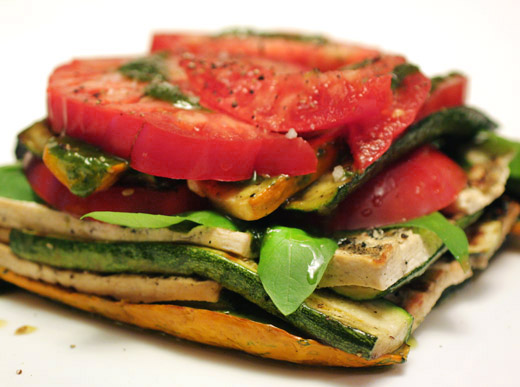
My gangly teen caterpillar hatched out of his egg a l-o-n-g time ago. But he's still hungry!
On Monday, he ate through one muffin baked using real milk and butter.
On Tuesday, he ate through yeast coffee cake (butter, milk, yum!).
On Wednesday, he ate some of a Stouffer's spinach souffle.
On Thursday, he actually ate a store-bought Sara Lee pound cake. (Went back for seconds on that one!)
On FRIDAY, he ate...7 1/2 edamame.
OK, everything was not as straightforward as a children's book, but my son has been really pushing the limits of his baked-milk tolerance over the last couple of weeks (especially over spring break) to see just where he's at. The great news is that he's doing AMAZINGLY well tolerating everything we've been giving him.
Today (Friday) was his soybean food challenge, which he passed with flying colors! The grand total after two hours was 7 1/2 soybeans, with nary an itch, cough or stomach hiccup. (He's actually even back in school for his last class of the day.)
Best of all, his doctor agrees with our assessment that he's ready for a lot freer eating, including restaurant food. Since clearance for soy + baked milk = most bakery breads, that means he can have a hamburger or hot dog and French fries at just about any restaurant in town.
We have instructions to do no more soy today, to let him eat as much of the package tomorrow as he likes and then to gradually introduce soy into his diet without restriction. Our doctor also has no concern about doubling up on baked milk and soy, so that opens up a whole WORLD of processed frozen foods.
We talked through (again) the hazelnut issue. The RAST he just had done was a 2.0; the one from the clinical trial was around a 12. She wants to see one more negative SPT before believing it to be a pollen allergy and doing an outright challenge in the office. In the meantime, we're going to try green pea again and repeat scratch testing for milk, hazelnut and the rest of the beans. We're all of one mind at this point: knock off every allergen we can before college!
So...was it the FAHF-2? Hard to say. We know he was well along to outgrowing his soy allergy because his last soy reaction occurred after almost a full bowlful of soy ice cream about three years ago (I bought a look-alike product in soy instead of coconut by accident). He had a pretty serious reaction at that time that did involve trouble breathing, but it took a LOT of soy to generate it. We will be cautious, however, because it's still possible that there's a threshold above which he cannot tolerate soy and we just didn't get there today.
His doctor also indicated that it usually takes about a year of baked milk before they like to do an open challenge. That's not very long at all! I wish we had instituted baked milk about a decade ago, but hey - better late than never, right?
I'll report back as we get rolling on some of these new foods. (Chinese!)
Follow me on Facebook or Twitter
Friday, April 5, 2013
Sunday, March 31, 2013
Easter Treats, Love, and Food Allergies
We're having a good Easter. My kids are now 18 and 14, but my 14-year-old daughter likes her traditions and still insists on the full basket-and-egg hunt, even while she's announcing she's really too old for all this.
My son has refused to hunt, or even to get out of bed the last couple of years, so this year my husband put the rest of their school-year allowance in the eggs. $10 an egg. Suddenly, he's in there fervently hunting. (They're down to their last couple apparently-unfindable eggs and are busy snarking at each other, so it's a good time to write a post.)
Easters past have been all about the...Legos? I will just admit it. Throughout my son's childhood, I simply inserted toys in any slot where candy was supposed to show up. A Lego for Easter. A Lego for a difficult trip to the doctor/dentist. Multiple Legos for Halloween. Secret Legos, slipped to him surreptitiously, while all the other kids are eating cake and ice cream. Over the years, our basement has turned into a Lego hoard that would make the builders at Legoland jealous.
I look back now and think why? Why did I invest so much money in redundant toys that really should have gone into his college fund?
And then I think about the cousin Easter baskets. Every year, the baskets would get handed out, and each child would sit down and fondle their chocolate wonders. The shiny wrappers! The giant bunnies! The enormous candy bars! And, in my son's basket: Lifesavers, Mike & Ikes, Airheads and Twizzlers.
The same candy at every party, every holiday, every lunch, every classroom treat.
By the time my son was in the late elementary years, he had learned not to care about the candy at all. It simply wasn't the important part of the party for him. If I had stood back and really looked, I might have seen that taking the food part of things away was actually helping him to enjoy and invest in the rest of the party in a more engaged way. My son loved parties and he loved people. He really didn't care about the cake. I did.
Food is love, after all, and the Lego was the best I could do to show my love in place of all those shiny, wrapped candy bars and Cadbury eggs and cheese-stuffed pizza and butter birthday cake with real cream ice cream.
Does different always = unequal? Does food always = love? Do we do our kids a favor by rushing into the gap with that Lego so they don't have to sort those equations out for themselves?
My son, despite my Lego-whenever-he-might-feel-left-out program, seems to have grown into a young man who can acknowledge, but not resent, the differences in his world. Yes, it's a PITA that he can't eat at his girlfriend's favorite restaurant...but what a testament to his character that they end up there often, anyway. Somehow, despite the Legos, he has learned it's not all about him.
That's something I'm very grateful for this Easter season. Sometimes they grow up well in spite of us.
Wishing you all a safe and very happy Easter!
Follow me on Facebook or Twitter
My son has refused to hunt, or even to get out of bed the last couple of years, so this year my husband put the rest of their school-year allowance in the eggs. $10 an egg. Suddenly, he's in there fervently hunting. (They're down to their last couple apparently-unfindable eggs and are busy snarking at each other, so it's a good time to write a post.)
Easters past have been all about the...Legos? I will just admit it. Throughout my son's childhood, I simply inserted toys in any slot where candy was supposed to show up. A Lego for Easter. A Lego for a difficult trip to the doctor/dentist. Multiple Legos for Halloween. Secret Legos, slipped to him surreptitiously, while all the other kids are eating cake and ice cream. Over the years, our basement has turned into a Lego hoard that would make the builders at Legoland jealous.
I look back now and think why? Why did I invest so much money in redundant toys that really should have gone into his college fund?
And then I think about the cousin Easter baskets. Every year, the baskets would get handed out, and each child would sit down and fondle their chocolate wonders. The shiny wrappers! The giant bunnies! The enormous candy bars! And, in my son's basket: Lifesavers, Mike & Ikes, Airheads and Twizzlers.
The same candy at every party, every holiday, every lunch, every classroom treat.
By the time my son was in the late elementary years, he had learned not to care about the candy at all. It simply wasn't the important part of the party for him. If I had stood back and really looked, I might have seen that taking the food part of things away was actually helping him to enjoy and invest in the rest of the party in a more engaged way. My son loved parties and he loved people. He really didn't care about the cake. I did.
Food is love, after all, and the Lego was the best I could do to show my love in place of all those shiny, wrapped candy bars and Cadbury eggs and cheese-stuffed pizza and butter birthday cake with real cream ice cream.
Does different always = unequal? Does food always = love? Do we do our kids a favor by rushing into the gap with that Lego so they don't have to sort those equations out for themselves?
My son, despite my Lego-whenever-he-might-feel-left-out program, seems to have grown into a young man who can acknowledge, but not resent, the differences in his world. Yes, it's a PITA that he can't eat at his girlfriend's favorite restaurant...but what a testament to his character that they end up there often, anyway. Somehow, despite the Legos, he has learned it's not all about him.
That's something I'm very grateful for this Easter season. Sometimes they grow up well in spite of us.
Wishing you all a safe and very happy Easter!
Follow me on Facebook or Twitter
Monday, March 25, 2013
What-Causes-Food-Allergies March Madness!
It's time to fill in your bracket and take your shot! (And, with 3 million kids in the US alone, that's an awfully big pool!)
vs.
vs.
Follow me on Facebook or Twitter
Vaccines!
Always in the Top 8. Maybe it’s the peanut oil, even though peanut
oil carries miniscule amounts of protein, even when it’s not highly purified.
The timing is suspicious, too. After all, kids get allergy shots at the same
time they’re developing allergies…
|
And
the bracket winner is…
GMO Foods! |
GMO
Foods!
Another perennial contender. After all, shouldn’t a food cause a food allergy? The timing is suspicious (early 90’s introduction
for many GMO foods). And God knows
Monsanto and other big Agra are sleazy…maybe to the point of not caring about
our kids?
|
vs.
Tylenol!
A surprise contender, as many parents trust the J&J brand more than Disney. However, acetaminophen has been implicated in other inflammation-linked disorders, including asthma and eczema.
|
And
the bracket winner is…
Tylenol!
|
Breastfeeding!
Another entry in the category of "food causes food allergies" is breastfeeding. One recent study found a correlation between it and a higher rate of allergies. (Pediatricians, too!) But if that was all there was to the story, wouldn't every baby who breastfed become allergic? Does it make sense that Mother Nature would set up a system so maladaptive?
|
vs.
The immune system gets...bored? Really? 100,000 years of human evolution and there's never been a time when the immune system had some down-time? O.k... |
And the bracket winner is…
Smoking, Obesity and/or High Salt Diets!
|
Or any other epigenetically-influencing environmental factor that's changed drastically between last generation and this one. Now you really can blame your parents for ruining your life.
|
vs.
Microbiome-Changing Chemicals Including Triclosan!
Obviously a must-have choice for my own bracket, triclosan has both impressive research and a possible mechanism to explains food allergies going for it. Will it go all the way this year? |
And the bracket winner is…
Microbiome-Changing Chemicals Including Triclosan! |
Environmental Contaminants, include PAHs
One of the hot topics at this year's AAAAI: can air pollution cause food allergies? Cigarette smoke is one source, but so are barbecue grills.
|
vs.
Global Warming! Or Sunscreen!
Really! Changes in our atmosphere may be leading to changes in how children absorb Vitamin D. Or, it may just be that this generation of parents has slathered on the sunscreen (with new chemicals in the 90s that do a better job of blocking rays). |
And the bracket winner is…
Global Warming! Or Sunscreen!
|
Infectious Disease!
Maybe it's a virus! Specifically (according to some researchers) respiratory syncytial virus, or RSV. We know kids are wheezier after a bout of RSV...but does it really up the risk of sensitization?
|
vs.
Bad Landscaping!
One interesting theory of how sensitization occurs is through exposure to pollen. So what's changed about pollen lately? Landscapers are using more and more plants that are not native to the areas in which they're being planted, resulting in exposure to new types of pollen. |
And the bracket winner is…
Money!
|
Money!
Did you know that, the higher your income, the more likely your kid is to have a food allergy? Are richer kids simply diagnosed more? Or might it be the new carpets and new paint wealthier parents often introduce into the nursery before Baby is born?
|
vs.
Refrigerators!
Guess what? Bacteria evolve to adjust to new environments, and one of the harshest new environments we've provided to our bacteria is the refrigerator. Listeria and other bacteria have risen to the challenge, though, and many doctors now believe this "superbug" may be the cause of Crohn's and other intestinal disorders. Is food allergies one of them? |
And the bracket winner is…
Refrigerators!
|
Detection Bias!
There are still some scientists who believe that this is really all about overdiagnosis. Their argument? They cite the 11% of the population of "sensitized" (allergic on a test only) to peanut vs. the 2-3% who actually demonstrate an allergy when fed peanut. More allergists = more testing = more false diagnoses.
|
vs.
Pesticides!
Oh...and your tap water too. Dichlorophenols are just about everywhere! Oh, and guess what! There's plans to make a new genetically-modified corn bred to be resistant to them...so farmers can spray them all over our food. GREAT idea! |
And the bracket winner is…
A Dark Horse from Somewhere No One Has Ever Heard Of...
|
A Dark Horse from Somewhere No One Has Ever Heard Of...
Maybe there's a scrappy little causative agent out there that has a lot of HEART and really wants to get in the GAME and TAKE this thing! YEAH!
|
Did you make your picks?
Sunday, March 24, 2013
The Not-Much-To-Update Update
I've waited to update you guys on my son's progress until I had some progress to report. I seem to be very unorganized and scatter-brained these days. True story: I called the allergist's office to get my son's RAST report.
ME: "Hi, I"m calling to see if you have my son's RAST test results back. It's been a couple of weeks since we were in."
NURSE: "Sure, let me check. Which lab did the blood draw?"
ME: "Um...what?"
NURSE: "We don't do blood draws here. Remember -- we gave you a lab order -- "
(She has to stop at this point because I've started laughing uncontrollably.)
NURSE: "Heidi? Is that you pimping me again? HEIDI?"
ME: "No, no, I'm sorry, I really am a parent. I just started laughing because I realized we never had the blood drawn. I'm so sorry!"
NURSE (long pause): "Um...o.k....I just thought it had to be the girl at the front desk again, teasing me. I mean, who calls for lab results when they haven't even - " (stops, as she realizes there's no way she can finish this sentence without letting me know what a complete IDIOT she thinks I am.)
ME: "Well, thanks! I'll obviously call back after we do the blood draw."
So that's how it's been going. My son did see his allergist and they did do SPT:
So...good and bad here. He's never had a completely non-reactive soy test. If the RAST comes back as promising, we'll probably do a soy challenge in the office in a month or two.
Hazelnut was an interesting conversation. The doctor agreed with my assessment that this is probably a pollen cross-reaction. She suggested an IOFC, rather than bothering with component testing, if the RAST is at a reasonable level.
Peanut was a shocker. If you remember, we actually had difficulty qualifying for the FAHF-2 food challenge because my son's RAST and SPT were borderline low for what they would accept. His peanut went from 3.5 during the challenge to a rather large 9 this time around. His allergist shrugged and said "well, you fed him peanut. That makes the numbers go up."
So does that mean he's more sensitized to peanut because the number went up? Honestly -- the more we've done RAST testing over the years, the more useless it's seemed to me. His RAST and SPT for green pea were (and still are) negative, and yet he failed that challenge, so clearly testing isn't everything.
Since the end of the clinical trial, we've introduced a ton of foods with "may contain" labels for both peanut and milk. (His allergist does concur with the advice from the clinical trial to start introducing these foods.) He's had absolutely no problem with any of it. For several weeks after the trial, we were also trying to work in daily baked milk. Again, he had no trouble with any amount we gave him, as long as it was straight milk or butter. However, over the last few weeks, we've all lost our mojo. I've recently started an in-office job (I've been freelancing from home the last year), so there's not a lot of time for baking and there's a very small window between a parent being home and it being too late in the evening to deal with the ER, should we need to do that.
I've actually toyed with the idea of sending his baked milk dose in his lunch. Our in-school nurse is very good and very interested in his clinical trial. I have a feeling she would be willing to be on-call if we wanted to risk doing this on her watch. But that seems a little far to go, even to speed up this process.
The bottom line is that I have a HUGE amount of empathy for the kids and parents in these OIT trials, where a daily dose is absolutely mandatory. My son missed at least two doses of FAHF-2 over the course of the trial. It was extraordinarily difficult to ensure every single dose was taken. (Granted: it was 3 doses a day, but even 1 dose every day is difficult.) If his desensitization had depended on my/his perfect compliance, we would have been in big trouble.
I also found that this new tolerance (and the potential to introduce soy in the near future) is causing issues I hadn't anticipated. A few days ago, we spent the day at one of the final two college possibilities. I spent about half an hour with food service trying to explain where he's at.
"So...if things go well, he may come to school with a lot fewer restrictions." The guy just looked at me and blinked. Clearly, they just want to know what to feed him and what not to feed him. This whole "maybe, sort-of, a little" business made both of us uneasy. How will he do baked milk at school, unless he's able to start eating it in everything?
I feel like we waited so long to try some of these things, and now we're out of time. I can quit my job again and dedicate myself to getting him as far as he's going to go with all this stuff. Or, I can work to pay for college. I apparently can't do both.
My son doesn't seem to have much interest in experimenting with milk-containing foods. He's definitely not an equal partner yet in pushing for new foods/higher tolerance. I think he just doesn't see his restrictions as that big a deal.
Who really needs to let go here?
Follow me on Facebook or Twitter
ME: "Hi, I"m calling to see if you have my son's RAST test results back. It's been a couple of weeks since we were in."
NURSE: "Sure, let me check. Which lab did the blood draw?"
ME: "Um...what?"
NURSE: "We don't do blood draws here. Remember -- we gave you a lab order -- "
(She has to stop at this point because I've started laughing uncontrollably.)
NURSE: "Heidi? Is that you pimping me again? HEIDI?"
ME: "No, no, I'm sorry, I really am a parent. I just started laughing because I realized we never had the blood drawn. I'm so sorry!"
NURSE (long pause): "Um...o.k....I just thought it had to be the girl at the front desk again, teasing me. I mean, who calls for lab results when they haven't even - " (stops, as she realizes there's no way she can finish this sentence without letting me know what a complete IDIOT she thinks I am.)
ME: "Well, thanks! I'll obviously call back after we do the blood draw."
So that's how it's been going. My son did see his allergist and they did do SPT:
Milk
|
7/30 (about as bad as last time)
|
Soy
|
NOTHING!
|
Hazelnut
|
NOTHING!
|
Peanut
|
9/30
|
So...good and bad here. He's never had a completely non-reactive soy test. If the RAST comes back as promising, we'll probably do a soy challenge in the office in a month or two.
Hazelnut was an interesting conversation. The doctor agreed with my assessment that this is probably a pollen cross-reaction. She suggested an IOFC, rather than bothering with component testing, if the RAST is at a reasonable level.
Peanut was a shocker. If you remember, we actually had difficulty qualifying for the FAHF-2 food challenge because my son's RAST and SPT were borderline low for what they would accept. His peanut went from 3.5 during the challenge to a rather large 9 this time around. His allergist shrugged and said "well, you fed him peanut. That makes the numbers go up."
So does that mean he's more sensitized to peanut because the number went up? Honestly -- the more we've done RAST testing over the years, the more useless it's seemed to me. His RAST and SPT for green pea were (and still are) negative, and yet he failed that challenge, so clearly testing isn't everything.
Since the end of the clinical trial, we've introduced a ton of foods with "may contain" labels for both peanut and milk. (His allergist does concur with the advice from the clinical trial to start introducing these foods.) He's had absolutely no problem with any of it. For several weeks after the trial, we were also trying to work in daily baked milk. Again, he had no trouble with any amount we gave him, as long as it was straight milk or butter. However, over the last few weeks, we've all lost our mojo. I've recently started an in-office job (I've been freelancing from home the last year), so there's not a lot of time for baking and there's a very small window between a parent being home and it being too late in the evening to deal with the ER, should we need to do that.
I've actually toyed with the idea of sending his baked milk dose in his lunch. Our in-school nurse is very good and very interested in his clinical trial. I have a feeling she would be willing to be on-call if we wanted to risk doing this on her watch. But that seems a little far to go, even to speed up this process.
The bottom line is that I have a HUGE amount of empathy for the kids and parents in these OIT trials, where a daily dose is absolutely mandatory. My son missed at least two doses of FAHF-2 over the course of the trial. It was extraordinarily difficult to ensure every single dose was taken. (Granted: it was 3 doses a day, but even 1 dose every day is difficult.) If his desensitization had depended on my/his perfect compliance, we would have been in big trouble.
I also found that this new tolerance (and the potential to introduce soy in the near future) is causing issues I hadn't anticipated. A few days ago, we spent the day at one of the final two college possibilities. I spent about half an hour with food service trying to explain where he's at.
"So...if things go well, he may come to school with a lot fewer restrictions." The guy just looked at me and blinked. Clearly, they just want to know what to feed him and what not to feed him. This whole "maybe, sort-of, a little" business made both of us uneasy. How will he do baked milk at school, unless he's able to start eating it in everything?
I feel like we waited so long to try some of these things, and now we're out of time. I can quit my job again and dedicate myself to getting him as far as he's going to go with all this stuff. Or, I can work to pay for college. I apparently can't do both.
My son doesn't seem to have much interest in experimenting with milk-containing foods. He's definitely not an equal partner yet in pushing for new foods/higher tolerance. I think he just doesn't see his restrictions as that big a deal.
Who really needs to let go here?
Follow me on Facebook or Twitter

Thursday, March 21, 2013
There's a Food Allergy Cure! Well, No, Maybe Not...
There's a new professional cat fight in the food-allergy community this week, this one sparked by the New York Times story "Can A Radical New Treatment Save Children With Severe Allergies?" (The NYT has a weird paywall thing going on where you only get to read so many stories a month, so hopefully the link will work for you.)
The therapy is new in that Dr. Nadeau has taken OIT therapy to the obvious next step and addressed all of a child's allergens at once, rather than the one-at-a-time approach that's not very helpful for those of us with MFA kids. Beyond that..not so much is new.
To give a little history, Dr. Nadeau first hit super-stardom at the 2011 AAAAI conference, where she presented a study of 11 milk-allergic kids who had been desensitized in a single day using Xolair®, a drug I just talked about in my Lord of the Rings manifesto that just about no one slogged through. To recap for all you readers who just hate fantasy, Xolair® inserts itself into the receptors in mast cells so IgE can't bind. It's like throwing a bucket of water on the overactive immune response. It also can cause cancer in some people...and anaphylaxis in a few...so not a drug for the faint-hearted.
As I noted in a post earlier this month during this year's AAAAI conference, the glow has faded from the OIT bloom. Here's how one conference follow-up summarized the long-term outcome for milk OIT:
Only 25% could consume milk without symptoms at 3 months. More than half of the follow-up participants reported frequent symptoms accompanying milk consumption including six systemic reactions and two reactions requiring epinephrine. One participant, who was not symptomatic after passing a 16-gram challenge during the study, became reactive at follow-up and presently only consumes minimal milk.
"We're really worried that the [participants] will leave the study with a false sense of security," Wood said, adding that he'd seen participants lose protection in as early as 1 week off therapy. "Compounded with the fact that these kids don't like the foods they've been allergic to, there's a real inherent risk we need to recognize, and that risk actually scares me a lot more than the recognizable short-term risk" which patients face with monitored dose-escalation, he said. Wood noted that oral immunotherapy "is not yet ready for clinical practice," and that more research is needed with longer follow-up.
There's no reason (yet!) to think the addition of Xolair® to this process will change the outcome. So...just as the New York Times is hitting the street with a sensational headline, the long-term outcome for this therapy has never been more in doubt.
Another doctor, Wayne Shreffler from Mass. General, has obviously been here before as well. He issued a letter addressing his concerns about the NYT feature.
And then it got weird. The author of the NYT article, Melanie Thernstrom, rebutted Dr. Shreffler's rebuttal.
Can we hope for a rebuttal of a rebuttal of a rebuttal next? Meow!
But seriously...I see both sides of this thing. I am so tired of hearing about the magical cure that's just around the corner, especially when I've been on the yo-yo of hope with this therapy for several year. We KNOW some kids will outgrow their allergy if they're force-fed their allergen. But we're also finding out that it doesn't work at ALL for other kids, and for a third group, it works at first and then fails...sometimes dismally. One in three odds (or thereabouts) is not really a cure, especially if the 1/3rd of kids it works on would have outgrown their allergies anyway. If this therapy only targets the outgrowers, then it's not really a therapy at all -- just a shortcut.
On the other hand...one in three. Why not? I can see where parents would throw the dice, in the hope their kid would be one of the lucky ones. If you are that dice-throwing parent, there are going to be a series of new clinical trials opening up around the country that utilize Xolair® as part of the OIT process.
My son and I actually discussed whether he wanted to participate in this trial because Chicago will be one of the sites. However, we all have clinical trial exhaustion at this point. We also picked FAHF-2 for a reason: because it had great potential for positive outcome without the "rebound allergy" that seems to be happening with kids in some of these other trials.
I don't like to be a Nervous Nelly. But, before I would sign up for this trial, I'd want an honest answer from the researchers involved as to why they think Xolair® plus oral immunotherapy has the potential to succeed where just plain oral immunotherapy has not. Haven't we been here before?
On the other hand...one in three. Why not? I can see where parents would throw the dice, in the hope their kid would be one of the lucky ones. If you are that dice-throwing parent, there are going to be a series of new clinical trials opening up around the country that utilize Xolair® as part of the OIT process.
My son and I actually discussed whether he wanted to participate in this trial because Chicago will be one of the sites. However, we all have clinical trial exhaustion at this point. We also picked FAHF-2 for a reason: because it had great potential for positive outcome without the "rebound allergy" that seems to be happening with kids in some of these other trials.
I don't like to be a Nervous Nelly. But, before I would sign up for this trial, I'd want an honest answer from the researchers involved as to why they think Xolair® plus oral immunotherapy has the potential to succeed where just plain oral immunotherapy has not. Haven't we been here before?
Tuesday, March 19, 2013
How Do Food Allergy Treatments Work?
I've been thinking a lot lately about whether our experience with the FAHF-2 food allergy trial was worth all the time and hassle. In a sense, the jury is still out because we don't know yet what effect the medication may have had on my son's milk allergy. (The near impossibility of getting an almost 18-year-old to stay still in one place while consuming baked milk is a topic for another blog post.) However, I also grapple with what exactly the medication did.
So why is there a creepy Orc over there, you ask? Because it seems to me that, up until this point, food allergy treatments have used a Lord of the Rings strategy. Think of the cast of characters this way:
The allergen is the Orc. Maybe he's completely misunderstood, but bad things seem to occur as soon as he hits the kingdom so, as soon as they see even one Orc, the mast cells go all nutty and light the signal fires. This starts a cascade of chemical messages throughout the body.
Histamines and other chemical messengers play the part of the Riders of Rohan. They see the fires and go forth to every cell in the body and say "rally the troops!" Antihistamines work by coating cell receptors so the Riders of Rohan simply can't get inside the cell to deliver the message. That's why there's a lot of debate about whether putting out some of those signal fires can help to lessen reactions.
However, doctors don't recommend antihistamine only to treat reactions for an important reason: neither the number of Orcs or the number of Riders of Rohan determine the allergic response. It's what happens next that determines just hives...or full-out anaphylaxis...or something in-between.
Whether a few riders make it through or a lot of them do, at some point, the body decides how forcefully it's going to respond. For most people, the response seems to be dose-dependent: the more Orcs in the body, the more Riders of Rohan, the more forceful the response.
However, for a sub-segment of allergic individuals, the response is way out of proportion to the threat. If the right few Orcs show up...or the right Riders reach the king...a severe response/reaction can occur. There are a couple of theories as to why. One theory is that some people have a genetic variant that causes their body to over-respond to perceived threats. Another theory is that children who are allergic to more than one hot spot on a protein are likely to have a more robust response.
Once the King and all his troops are called to the body's battlefield, it's hard to stop the war. Epinephrine is the best way. Like the Ents in the river scene in "The Two Towers", epinephrine opens up closed airways and sweeps away chemical messengers that have caused so much trouble. It also gets fluids to return to the river bed instead of running rampant through the body once all the fun is over.
So how does all this relate to the food allergy clinical trials currently underway? In almost all of these trials (oral immunotherapy, SLIT, skin patch), the idea is to just keep slipping Orcs into the body until the Riders of Rohan get used to them. After all, there are only so many times you can pelt into the hall of the king and shout "Rally the troops!" before the king stops listening.
However, these studies all seem to have an upper limit. While the Riders will ignore a few Orcs, eventually a tipping point is reached where the body can no longer ignore the incursions. That's the difference between desensitization (getting used to a few Orcs) and tolerance (no longer seeing Orcs as a threat at all). Plus, most of these studies seem to depend on having those Orcs constantly milling about. If you take the Orcs away for a few weeks and then reintroduce them, the signal fires get lit and the riders ride, just as if they were never there at all. That's why kids who miss a day of oral therapy can suddenly find themselves having a bad reaction. Is living with Orcs really the best option?
The newest therapy on the horizon is OIT combined with omalizumab (Xolair®), a drug that works at the very beginning of the process by inserting itself into the receptors in mast cells so IgE can't bind. If you think of the Orc and the signal fire, omalizumab acts like rain on the fire wood. The signal fire never gets started, so the Riders of Rohan never ride and...well, you get the idea.
The problem with this is that omalizumab also seems to get in the way of the immune system recognizing and fighting cancer cells. It can also work in the complete opposite way and cause anaphylaxis for some people. That's why it comes with what's known as a "black box" warning -- a strong caution that only people who really don't have another choice should consider using the drug. However, the people conducting these food-allergy studies believe that the very small amount of time the drug will be used will not cause any long-term immune effects.
The theory is that one day, the body will wake up after therapy and see Orcs everywhere. Since there were no signal fires and no Riders of Rohan, the armies of Middle Earth will (in theory) just shrug and go "hey, guess those Orcs weren't so bad after all."
Yeah, doesn't seem like it would work to me either. But that's the theory. Some kids just seemed destined to learn to live with Orcs, so this may just be accelerating the process for those kids. For others, it may just be a faster way to learn that they're not good candidates for OIT. Only time will tell if it's all just a fantasy.
So what happens with FAHF-2?
That seems to be a different story altogether. Rather than training the body to ignore an allergen through desensitization, the medication seems to cause a general snooziness in the immune system. Poppies...poppies.
How does it work? No one knows. Somewhere along the Yellow Brick Road, something changes. FAHF-2 works for all allergens and it works whether those allergens are in the body or not, so it's a very different model than OIT. Perhaps it reduces overall inflammation. Perhaps it promotes an environment where something missing (gut bacteria?) can get re-established. Whatever the mechanism, it does not seem to have the same overall suppressive effect on the immune system that omalizumab does.
The truth with all this is that, despite long flowcharts of chemical mediators attached to most research studies, no one really knows the answer to the important question: what causes an allergy in the first place? Why does the Wicked Witch of the Allergic West tell some children "I'll get you, my pretty" and ignore other kids altogether? What bucket of water will destroy all that beautiful wickedness?
Somewhere out there is the magic formula that will cause these allergies to just melt away. Maybe we all just need to click our ruby slippers together a little harder.
Follow me on Facebook or Twitter

So why is there a creepy Orc over there, you ask? Because it seems to me that, up until this point, food allergy treatments have used a Lord of the Rings strategy. Think of the cast of characters this way:
Histamines and other chemical messengers play the part of the Riders of Rohan. They see the fires and go forth to every cell in the body and say "rally the troops!" Antihistamines work by coating cell receptors so the Riders of Rohan simply can't get inside the cell to deliver the message. That's why there's a lot of debate about whether putting out some of those signal fires can help to lessen reactions.
However, doctors don't recommend antihistamine only to treat reactions for an important reason: neither the number of Orcs or the number of Riders of Rohan determine the allergic response. It's what happens next that determines just hives...or full-out anaphylaxis...or something in-between.
Whether a few riders make it through or a lot of them do, at some point, the body decides how forcefully it's going to respond. For most people, the response seems to be dose-dependent: the more Orcs in the body, the more Riders of Rohan, the more forceful the response.
However, for a sub-segment of allergic individuals, the response is way out of proportion to the threat. If the right few Orcs show up...or the right Riders reach the king...a severe response/reaction can occur. There are a couple of theories as to why. One theory is that some people have a genetic variant that causes their body to over-respond to perceived threats. Another theory is that children who are allergic to more than one hot spot on a protein are likely to have a more robust response.
Once the King and all his troops are called to the body's battlefield, it's hard to stop the war. Epinephrine is the best way. Like the Ents in the river scene in "The Two Towers", epinephrine opens up closed airways and sweeps away chemical messengers that have caused so much trouble. It also gets fluids to return to the river bed instead of running rampant through the body once all the fun is over.
So how does all this relate to the food allergy clinical trials currently underway? In almost all of these trials (oral immunotherapy, SLIT, skin patch), the idea is to just keep slipping Orcs into the body until the Riders of Rohan get used to them. After all, there are only so many times you can pelt into the hall of the king and shout "Rally the troops!" before the king stops listening.
The problem with this is that omalizumab also seems to get in the way of the immune system recognizing and fighting cancer cells. It can also work in the complete opposite way and cause anaphylaxis for some people. That's why it comes with what's known as a "black box" warning -- a strong caution that only people who really don't have another choice should consider using the drug. However, the people conducting these food-allergy studies believe that the very small amount of time the drug will be used will not cause any long-term immune effects.
The theory is that one day, the body will wake up after therapy and see Orcs everywhere. Since there were no signal fires and no Riders of Rohan, the armies of Middle Earth will (in theory) just shrug and go "hey, guess those Orcs weren't so bad after all."
Yeah, doesn't seem like it would work to me either. But that's the theory. Some kids just seemed destined to learn to live with Orcs, so this may just be accelerating the process for those kids. For others, it may just be a faster way to learn that they're not good candidates for OIT. Only time will tell if it's all just a fantasy.
So what happens with FAHF-2?
That seems to be a different story altogether. Rather than training the body to ignore an allergen through desensitization, the medication seems to cause a general snooziness in the immune system. Poppies...poppies.
How does it work? No one knows. Somewhere along the Yellow Brick Road, something changes. FAHF-2 works for all allergens and it works whether those allergens are in the body or not, so it's a very different model than OIT. Perhaps it reduces overall inflammation. Perhaps it promotes an environment where something missing (gut bacteria?) can get re-established. Whatever the mechanism, it does not seem to have the same overall suppressive effect on the immune system that omalizumab does.
Somewhere out there is the magic formula that will cause these allergies to just melt away. Maybe we all just need to click our ruby slippers together a little harder.
Follow me on Facebook or Twitter

Monday, March 11, 2013
Are Food-Allergy Parents At War With Their Doctors?
My husband and I have often questioned whether our son has the best allergy doctor. Our son sees one of the noted specialists in our urban area. By everyone's assessment, the man is brilliant. He specialized in pediatric food allergies and is clearly knowledgeable in that area.
At the same time, he gives really bad advice. He's very absent-minded. We spend much of every appointment reiterating our son's allergens, past testing, etc. He's fairly conservative and doesn't (so far) support any of the clinical research treatment options. And, he can be very casual about food challenges, telling us to "go ahead and try it at home", something we were not at all comfortable with when our son was younger.
Should we have shopped for a new doctor? So many other FA parents we know doctor shop — some seem to do so constantly. I know people who have been through four or five doctors and who still conclude that the issue is with the doctors and not their expectations. Are allergists really that terrible, or are we simply expecting too much from them?
When you come right down to it, doctors can offer us various diagnostic tests that seem to have less and less meaning as the years go by, prescriptions...and their advice. Once our children are diagnosed, we're basically going back for the hope and the crystal ball, even though every year's "Will he outgrow?" question from us is inevitably answered with "We just don't know."
Most of us are roped in, of course, by the need for that yearly epinephrine prescription. But...if prescriptions were automatically renewed and health insurance covered other possibilities — say, nurse clinicians, nutritionists, anxiety therapists, food allergy lifestyle specialists (don't you wish there were such a thing?) — would we really choose to spend our hard-earned money each year at the allergist's office?
Juxtaposed against all this is our doctors' opinions. There seemed to almost be a tone of blame to some of the reports and tweets from the AAAAI meeting about current clinical trials. Drop-out rates are very high — often 20 to 30% of patients. For the patients who stick it out, one missed maintenance dose (even when it happens because of illness) can cause a reaction and relapse back to very low levels of allergen tolerance. Do our doctors believe food allergy patients just aren't trying hard enough?
Food challenges are another area where doctors and patients can walk away from the table with very different ideas about what happened. What constitutes a food challenge "pass?" For many parents, any acute symptom in the next 48 hours, and mystery symptoms for weeks or months later, end up attributed to the food challenge or subsequent food reintroduction. For doctors, if it doesn't show up in the office, it seemingly doesn't count. How does it happen so often that doctors check the PASS box while parents check the FAIL — all while observing the same child? (About 13% of parents whose child passes a food challenge do not reintroduce the food because of real or perceived continuing symptoms.)
The current running through both sides of the river is judgment. Do our doctors believe us? Do we, as patients, listen to them? Should we always listen to them, when it often seems they know less about how to deal with food allergies than we do? Why do they keep doing scratch/RAST testing on tons of things and handing us results with no explanation of sensitization vs. true allergy? Why don't they help us with our day-to-day lives? Our children's mental health? Stand up for us with schools?
On the doctor's side of the river: why aren't parents giving epinephine when we've told them to? Why are parents still giving foods they know cause an allergic reaction? (Remember the Pediatrics study?) Why do they expect so much more from us than medical diagnosis, pharmaceuticals and occasional lab tests?
The river of misunderstanding is very wide. And, even if we're able to eventually build a bridge to better communication, there are often still a lot of bad feelings that have already flowed under.
Follow me on Facebook or Twitter
At the same time, he gives really bad advice. He's very absent-minded. We spend much of every appointment reiterating our son's allergens, past testing, etc. He's fairly conservative and doesn't (so far) support any of the clinical research treatment options. And, he can be very casual about food challenges, telling us to "go ahead and try it at home", something we were not at all comfortable with when our son was younger.
Should we have shopped for a new doctor? So many other FA parents we know doctor shop — some seem to do so constantly. I know people who have been through four or five doctors and who still conclude that the issue is with the doctors and not their expectations. Are allergists really that terrible, or are we simply expecting too much from them?
When you come right down to it, doctors can offer us various diagnostic tests that seem to have less and less meaning as the years go by, prescriptions...and their advice. Once our children are diagnosed, we're basically going back for the hope and the crystal ball, even though every year's "Will he outgrow?" question from us is inevitably answered with "We just don't know."
Most of us are roped in, of course, by the need for that yearly epinephrine prescription. But...if prescriptions were automatically renewed and health insurance covered other possibilities — say, nurse clinicians, nutritionists, anxiety therapists, food allergy lifestyle specialists (don't you wish there were such a thing?) — would we really choose to spend our hard-earned money each year at the allergist's office?
Juxtaposed against all this is our doctors' opinions. There seemed to almost be a tone of blame to some of the reports and tweets from the AAAAI meeting about current clinical trials. Drop-out rates are very high — often 20 to 30% of patients. For the patients who stick it out, one missed maintenance dose (even when it happens because of illness) can cause a reaction and relapse back to very low levels of allergen tolerance. Do our doctors believe food allergy patients just aren't trying hard enough?
Food challenges are another area where doctors and patients can walk away from the table with very different ideas about what happened. What constitutes a food challenge "pass?" For many parents, any acute symptom in the next 48 hours, and mystery symptoms for weeks or months later, end up attributed to the food challenge or subsequent food reintroduction. For doctors, if it doesn't show up in the office, it seemingly doesn't count. How does it happen so often that doctors check the PASS box while parents check the FAIL — all while observing the same child? (About 13% of parents whose child passes a food challenge do not reintroduce the food because of real or perceived continuing symptoms.)
The current running through both sides of the river is judgment. Do our doctors believe us? Do we, as patients, listen to them? Should we always listen to them, when it often seems they know less about how to deal with food allergies than we do? Why do they keep doing scratch/RAST testing on tons of things and handing us results with no explanation of sensitization vs. true allergy? Why don't they help us with our day-to-day lives? Our children's mental health? Stand up for us with schools?
On the doctor's side of the river: why aren't parents giving epinephine when we've told them to? Why are parents still giving foods they know cause an allergic reaction? (Remember the Pediatrics study?) Why do they expect so much more from us than medical diagnosis, pharmaceuticals and occasional lab tests?
The river of misunderstanding is very wide. And, even if we're able to eventually build a bridge to better communication, there are often still a lot of bad feelings that have already flowed under.
Follow me on Facebook or Twitter
Subscribe to:
Posts (Atom)