
Showing posts with label food allergies and anxiety. Show all posts

Wednesday, April 11, 2012

The Stress Lasagna

Balancing Food Allergy Stress With Mental Health
Sabrina. BJ. Nathan. Ammaria. Katelyn. If you immediately knew what those names have in common, this column is for you.

Food allergy deaths are never an easy topic, but one I feel obligated to write about. Since I started writing this column, I've re-immersed myself in the chat world of food allergies and I've been struck -- all over -- by how often we reference these children. (I was even in one conversation recently where one of these dead children was used with the intent to "win" an argument.)

I'm going to assume you've done your homework as a parent. You've met with a good allergist. You've done the testing required to truly identify your child's allergies.You have an Epi-Pen if appropriate, and a good action plan from your doctor on when you should use it. You've done everything you can to make the people and environment around your child as safe as possible.

Given all that, why are we still obsessively reading these stories? What is it we hope to learn?

The answer I've heard over the years is that parents want to know what went wrong so they won't make the same mistake. On the surface, that seems sensible. But, after a while, the reasons for these deaths become familiar. Cross-contamination. Manufacturing mistakes. A caregiver substitutes the wrong food. An Epi-Pen was not readily available. Food was eaten in a restaurant without checking for ingredients. Or perhaps ingredients were checked but the server/chef/manager gave inaccurate information.

And, of course, the ones that haunt us most are the ones where the parents did everything right. They recognized the reaction, treated it promptly and the child still died.

Stress from food allergies is like a lasagna. When we first start on our food allergy journey, the first few stories we hear are like the first few layers -- necessary, nutritious. But the stories just keep piling on, layer after layer after layer.  After the 20th layer, something's gotta give. It's just more than any human being could possibly digest.

And, oddly, there's a whole other list of children whose names we do not reference. Mercedes Mears died at school from an asthma attack. Aylin Rodriguez died when the car in which she was riding was broadsided. There are four thousand deaths a year from asthma. More than a million children worldwide are killed each year in car accidents. And yet, these children do not get added to our stress lasagna. Why is that?

Daniel Gilbert wrote an excellent book about risk entitled Stumbling on Happiness. The book posits that there are four characteristics crazy-making threats have in common:
  1. The perception that someone is doing something to us. Chance events (think global warming) are nowhere near as scary as events where someone intends us harm (think terrorism).
  2. The feeling that someone is acting immorally. Feelings of anger or disgrace kick us into high gear.
  3. The immediacy of the threat. The further away in time the bad thing may occur, the less we respond.
  4. How quickly change occurs. If a threat happens gradually (that funny on-and-off knocking in your car), it's taken less seriously than changes that happen suddenly (the THWAMP noise).  
If you think through these, it's easy to see why we might focus on food allergy deaths over asthma deaths (even though many of our children have asthma) or car accidents (even though our kids are in the car every day and at much higher risk of death there):
  • We perceive schools, friends and society as neglecting our children, and even sometimes intentionally wanting to harm them. 
  • We feel angry and societally-marginalized when our children are excluded. 
  • We are aware that food allergies can happen anywhere, at any time. 
  • When they do happen, the threat is rapid and dramatic. 
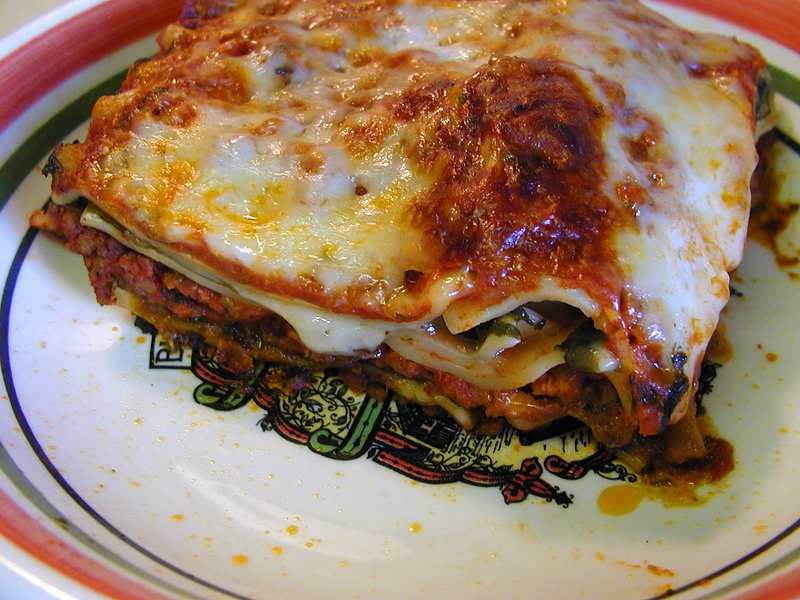
Because our brains work this way, it's difficult to resist reading the stories that re-emphasize our fears. We take precautions for the threats that seem the most dire. I am horrified at the thought of giving my kid a grocery store sample...yet I still (yes, I admit it) talk on my cell phone while I'm driving home. The more we read...the more we avoid...the more we obsess...the more layers we add to the lasagna, and the less attention we pay to equally-preventable dangers.

I've attended several FAAN conferences over the years. The highlight for my husband and I is always the parent lunch, the opportunity to meet other parents from around the country dealing with the same things we're dealing with. The conferences are somewhat self-selecting. Most of us are there because we're not casual parents when it comes to this stuff. We want to know everything we can know, prevent everything we can prevent.

I'm always surprised at how quickly the get-to-know-you banter is set aside and the big issues come out. And the "big issue" is never dealing with reactions - it's almost always anxiety. "My nine year old is afraid to eat; we had to put her in therapy," was one year's subject.

"There are days I feel like it would just be easier if we never left the house," said another mother. "It just seems like there are dangers everywhere."

By now, we know it all. We're doing it all. And yet, we're still piling on the stress, layer by layer by layer. We're still reading the stories.

Don't get me wrong - I think what the parents of children who have died from food allergy reactions do to spread awareness in our community is an amazing thing, and one that I'm not sure I could do if I were in their shoes. It's important work to reach out to the just-diagnosed and help them to learn. But there comes a time to say "I've learned what I can learn" from these situations.

I'm sure some will call that denial. But anxiety disorders can be just as debilitating as food allergies. And you don't see them coming because they don't involve others, don't make us angry, take time to develop and have no dramatic symptoms. It makes no sense to ignore the mental health threat to our community and focus only on the physical.

17 years is a LOT of lasagna. I'm putting down the fork.


Follow me on Facebook for updates! 

Tuesday, January 31, 2012

Tigers In Our Midst: Groupthink, Anxiety and Allergy Communities

When my son was around four, he started developing "mystery" reactions to foods he had eaten all his life. My husband and I were absolutely panicked; in addition to the stress of the reactions, many of the suspect foods were staples in his somewhat-limited diet.

We pursued allergy testing, but the doctors' conclusion was something called "idiopathic anaphylaxis", meaning reactions with no known cause. They told us it might be food, but it also might be exercise...or something environmental...or a combination of things. So, basically, go forth and live your life with the snarling tiger of an out-of-the-blue reaction always focused on your shoulder blades. Pounce!

Understandably, it was at this point I sought out an on-line help community, thinking that someone else must have gone through this. Luckily, some of you had. While no one had been through our particular flavor of crazy, you gave me enough tips and experiences that we finally did identify what was going on: an allergy to a seed-pod protein found in almost the entire legume family. Problem solved! Reactions averted!

However, there was a price.

I stuck around the community, on and off, for years. Eventually, I ended up running it for three years. What that meant from a practical perspective is that I was there every day, reading as many posts as possible to identify potential problems/trolls.

Little by little, as I spend more and more time there, I felt the eyes of a different tiger drilling into my shoulder blades: groupthink anxiety. Some of you may know what I'm talking about:
  • What do you mean you give Benedryl at the beginning of a reaction? Epi-Pen, right away, no matter what!
  • Your child is having so many reactions! Maybe you're taking too many chances.
And, always underneath every surface-helpful but ultimately-judgmental post:
  • What if you wait too long/take a chance/do something wrong and your child dies?
I've read the list of everyone who ever died from a food allergy. I've emailed with the parent visitors whose children passed away. I'm not saying this is a zero-risk situation.

However, it got to the point where I was questioning whether I was a bad parent to allow my child to attend a sleepover. Questioning whether I should be forcing the school (ha!) to institute a peanut ban, even though my son had never had a contact reaction. Whether touching the outside wrapper of a peanut-containing candy bar was really a risk. And, through every discussion, ran the tiger of what if you do something wrong and your child dies? The groupthink always gravitated toward the most extreme comfort zone and constant immersion made it very hard to keep my own boundaries.

Our on-line communities serve an information and support purpose that's very difficult to find in the physical world. However, for me, it also reinforced anxiety in a way that was not healthy.

It all came to a head when we started re-introducing some of those foods to my son to which he had showed an allergy at age four. The inevitable consequence of food challenges and re-introductions is symptoms. Itchy mouth. Funny feeling in the throat. "Push through it," said our doctor. My God, what are you doing, give a fricking Epi-Pen and stop this high-risk behavior before your kid is another statistic was the voice I heard in my head.

I quit the community over a year ago in the hopes of taming the anxiety tiger. However, I still hear its voice every time I hand my kid a food containing baked milk (which we were cleared for last summer). It's what makes me hesitate to keep the dosage consistent. It's what makes me obsessively worry every time he coughs or clears his throat after he eats it.

So...I'm back to where we were in preschool, feeling the eyes from the tiger of random reactions (this time from problem foods I'm choosing to give him) drilling into the back of my shoulder blades. Facing off with Random-Reaction Tiger is Constant-Anxiety Tiger, who I've knowingly fed for over 10 years in exchange for invaluable information.

And right in the middle is my son, who watches my face each time I give him his milk-containing food. And each time he considers going out with friends...or asking a girl to a dance...or trying to figure out how college is going to work for him. He sees the tigers. He's anxious and afraid and really, really angry, and I don't blame him one bit.

Tigers suck.