Friday, March 7, 2014

Life After Food Allergies

OK, so that post title is a little hyperbolic. My kid is still allergic to peanuts, and possible hazelnuts, lentils and some varieties of beans. (Doing a home black bean challenge today.) But really, I've felt over the last week like a HUGE burden has been lifted.

I think my son feels relieved as well, but what I've mostly been noticing is the anger. He's a really easy-going, loving kid so when he says things like "I'll try not to die" when I ask how things have been going, it's obvious that he's dealing with some simmering resentment toward my overprotectiveness and probably toward his allergies in general.

When we were at the food challenge last week, I did float the question out there to his allergist: If his numbers are still high, yet he passed, is it possible he outgrew this allergy years ago? It was a very impolitic question and she squirmed a little before answering that everything has its time and we should just be grateful. But I know it's what you all want to know: was this kid truly allergic to all these foods and the FAHF-2 really helped? Or were his parents and doctors just really overprotective and doing food challenges that should have been done years ago?

I don't know.
What both our regular doctor and the doctors at Children's Memorial told us is that RAST numbers do matter for most kids. Our kid just appears to be the exception. His RAST for peanut going into the study was <1, just barely over the qualification threshold. Since the trial, it's spiked back up to something like 10 (having trouble finding those results but will post the actual number if I find it).

Regarding milk: his last reaction requiring a hospital trip was around age eight. My husband and I have been racking our brains this week, trying to remember other reactions to milk after that point. While there were many mild mystery reactions over those years, neither of us remembers anything serious that could be definitively attributed to milk. Thanks to my husband's amazing record-keeping, I do know his RAST results over the years for whole milk:

2003: 11.3 (class 3) - level year of last known anaphylactic reaction
2007: 7.62 (class 3)
2012: 5.71 (class 3)

Yes, those numbers are low compared to some kids. Yes, the numbers have dropped over the years. However, he's never been lower than Class 3 for milk and has had anaphylactic reactions. Where was the magic perfect testing point? As I've noted in another blog post, the Mt. Sinai recommendations are very aggressive, indicating that even children with known severe reactions should be evaluated for tolerance every 24 months.

So...like you, we were in the position of second guessing our doctors. To be fair, the research about adding baked milk to the diet to speed tolerance is new information, but should we have pushed harder for these challenges?

My son's last known soy hospital trip was 2010. Here are the soy numbers:

2003: 12.0 (class 3)
2007: 2.81 (class 2)
2010: anaphylactic reaction
2012: 1.18 (class 2)

Where was the magic moment for soy?

His last RAST in 2012 for black bean was 3.02, class 2. We are doing that one at home today.

During the Children's Memorial screening for the clinical trial, they ran hazelnut to see if they could use that if he passed the challenge for peanut. That number was ~12. The doctor wants to do a food challenge this summer for it and has every confidence he will pass. Apparently she agrees with us that numbers have stopped mattering much for this kid.

This post has become all about the numbers and that's fine...I know that's what a lot of you are interested in knowing. I would have wanted the same thing in your shoes. I would have scoffed at reports of a food allergy cure and assumed the parents just weren't aggressive enough about the diagnosis or resolution of the food allergy involved.

There is clearly more going on with resolution of an allergy than a drop in test numbers. Unfortunately, that's probably the only thing that's clear. Some have pointed to a rise in IgG4 as a more telling diagnostic criteria, or decreased basophils. Perhaps total IgE has to be taken in consideration when evaluating the likelihood of passing a challenge. We were not privy to the results from the clinical trial so I can't share those numbers, but perhaps they will be published at some point.

While we were doing the milk challenge, we talked quite a bit about the clinical trial. I expressed my frustration to my doctor about the delay in any results. Her response was not reassuring: "Often when there's a delay, it means they got mixed results. They may not publish at all." It may be that this medication will not work for everyone. It could even be that it doesn't work well for anyone, and that my son's experience was unrelated to the medication.

I'll write more later on how things are going (he's doing great and eating everything with no problem). But until then, here's an appropriate song:


Addendum: my husband did dig out and send me the clinical trial results. For those of you who have asked, here are the really technical numbers (which, frankly, I don't understand completely so I can't explain):

Basophils: 0.050
Eosinophils: 7
Total IgE: 851 (a significant drop from the last study)
Total IgG: 962

Follow me on Facebook or Twitter  

Friday, February 28, 2014

Graduation Day

I didn't start really crying until about halfway home. I still haven't fully processed what I'm about to write here.

When my son started middle school and still had his milk allergy, my husband and I really lost hope. We had seen the statistics and knew the vast majority of kids who are going to outgrow their allergy have done so by jr. high school. The more years that went by, the smaller the chance.

And yet...we just returned from the last of five food challenges done this year: milk. And he passed. He passed. HE PASSED!!!

The challenge was very quick. Four doses, a total of 1/4 cup of ice cream, spread out over about an hour and a half. No symptoms. Nothing.

The doctor told him that he really has no restrictions from this point forward. We can ramp up slowly or just have him start eating everything and anything. We stopped in at Chipotle on the way home and he ordered lunch with sour cream. I started my knee-jerk reaction at the counter because I saw cheese in the guacamole...and then I remembered it no longer mattered. It didn't matter that I touched the sour cream in my own lunch and then dipped my hands into the chip bag. All old thinking.

We actually sat at lunch and talked about the different kinds of milk and cheese, something I never could have envisioned 19 years ago that I would have to do with my nearly-grown son. I told him that cow's milk and goat's milk cheeses taste different. That the sour cream he was not very impressed with was totally different than the cream cheese on bagels.

We talked about how he could have a bakery cake now for his birthday. How we could go out to dinner anywhere. How he could go on a cruise and eat from the buffet.

I told him how many pennies I had thrown into wishing wells over the years.

I honestly don't know what to do with myself now. I've promised him I will stop asking him if he's o.k. and stop watching him. I'm sure it will take a long time to adjust to our new normal.

Nineteen years ago, almost to the day, my husband and I brought him home from the hospital, our first-born son. We had struggled (as I'm sure all parents do) to get him into his tiny car seat and all the flowers into the car. We struggled to get everyone and everything in the house. And then we both stopped.

"What do we do with him now?" my husband asked. I had no idea. Did we leave him in the car seat? Put him in his crib? Take his coat off, or leave him sleeping? We realized in that moment how totally clueless we were about parenting.

Today feels the same. Exactly the same. Every meal, every family activity has been impacted by this milk allergy. And now...I don't know what comes next.

But i know it's going to be wonderful.

Thank you, every one of you. Thank you to his doctors, both at his regular practice and through Children's in Chicago. Thank you to all the teachers and parents who helped. Thank you to my bosses who gave me the flexibility to deal with the clinic days and doctors appointments.

No, we don't know if it was the FAHF-2. No, we really don't even care. Yes, there's still peanut (and maybe hazelnut and lentil). Tomorrow I will start dissecting things and wondering whether we should have been doing these challenges sooner. We'll debate the maturing immune system vs. the impact of the pills.

Today I'm going to go watch him sleep, just like I did when he was the tiniest of babies, and be so very grateful that he is my child and that everything is o.k.

Friday, February 14, 2014

Food Allergy Festivus

I was not aware the holiday season stretched into February. But it must be so. For, you see, my family has decided to celebrate Festivus this week.

For those who are not Seinfeld fans, Festivus is the celebration involving the airing of grievances. And boy, is my family in the holiday spirit!

As we've all gotten older, my large family has developed lots of cracks and splinters in the social veneer. Most of us have strong, polarized political beliefs and it spills over into our interactions, even with the best of intentions to keep religion, politics and hot-button social issues out of conversation. However, each year in February, my mother celebrates her birthday. The one thing she always wants? All of us to gather and pretend to get along.

This year, it started with an email from my brother: "Why don't we all go out to Incredibly Cheese-Intensive Family-Style Italian Restaurant for mom's birthday so no one has to cook?" 

I couldn't even bring myself to reply. Nineteen years we've been at this and he's still not aware that my kid cannot eat anything in an Italian restaurant?

My husband sent the next volley: "Why don't we all go in on a computer for her?" 

You know where this is going, as it's obvious to anyone who deals with food allergies that a conversation about a gift will inevitably lead back to  you guessed it!  the unfair restrictions of food allergies on everyone around them.

"How's your new car working out?" Food allergies. "What'd you think of that Superbowl game?" Food allergies. "We're thinking about getting another dog." Food allergies. All conversational roads eventually lead to one place.

I've puzzled over why that is. These conversation never result in my family actually retaining any knowledge about food allergies. The people who don't support us continue to not support us no matter what we say, and these conversations seem to actually cause them to do a worse job with unsafe dishes and cross-contamination. So what's the deal?

It finally struck me that food allergies have actually become a proxy for the other topics we avoid. Unbelievable as it may be, my child's medical condition has been polarized to the point that my siblings use it now as a passive-aggressive way of letting me know they disagree with everything else I stand for.

By bringing that unsafe dish, unannounced, to Thanksgiving dinner, they're taking back control and letting me know that they don't believe us and will never believe us. It's inconvenient to their world view. It is actually easier for them to convince themselves that my child is faking it than it is to have to consider that they have used a child for nineteen years as a pawn in their mind games.

When it happened last Thanksgiving, that unsafe (cheeseburger) stuffing went right between the other two stuffings. I could have ruined the holiday and thrown it (and them) out of the house, but we don't fight that way. So, instead, I spent the next two hours hovering in the kitchen, trying to prevent people from passing utensils back and forth between the dishes. They knew it. I knew it. Passive-aggressive mission accomplished.

And here we go again  the same, tired conversation about what to bring and what not to bring, which will result in these people bringing something completely unsafe "by accident."

We are all polarized on certain topics. We all feel that emotional limbic system rush of rage around certain issues that should not obviously generate such a strong feeling. But food allergies?

You betcha.


Follow me on Facebook or Twitter  

Thursday, January 23, 2014

Musings on the Suddenness of Death and Hiding Food Allergies

I'm kind of a mess today.

I was all set to write a perky post about discovering my former supervisor has food allergies! I shared the news this morning with her that my son had passed the pea challenge. She, in turn, shared that she has an anaphylactic nut allergy, autoimmune urticaria and idiopathic anaphylaxis. Who knew!

I launched into several minutes on FAHF-2 and how it will benefit her if the researchers are able to bring it to market. I could see her eyes start to glaze and her uneasy glance around the office. Even when you have these conditions  perhaps especially when you have them  you have to be careful talking too much about them. People judge.

The reason I'm a mess, though, is that I sit right next to a guy who died today. No, he didn't die right in front of me. It happened off-site, at a hotel where he was staying overnight. (He commuted from a town some distance away and kept a room at a hotel for nights when he didn't drive home.) He and I had also had conversations about allergies, as his wife has an anaphylactic allergic to milk. He referenced it quite often, brought food from home she couldn't have, wanted to share the pain and frustrations...but also not. There was always a point where he would shut down and stop talking.

It's so hard to get what we need. We need to talk about this stuff. And yet, almost all the adults I've ever talked with who have an allergy seem to hide that fact from others. In almost every case, I've found out by accident because of some random passing comment that only someone "in the club" would understand.

And now he's dead. Probably a heart attack.

My thoughts have been so random today. I thought "I should go to the funeral and take her an Epi-Pen. I know he said she wouldn't carry one. Now that she's the only parent, she really needs to have one." I thought "I should send her that box of milk-free chocolates for Valentine's Day that he isn't going to be able to send her now. I'm the only one who knows where to get them."

Of course that would all be really weird and inappropriate. Food allergies are not a secret club. I don't get to claim some special bond with this guy just because I had those conversations. I especially shouldn't be talking to a woman I don't even know, about her health condition that she may not have wanted her husband to share.

Relief and shame, all at once. It's what I think adults feel when they recognize someone understands their food allergy. They don't really want to talk about it, but they need to. It's sad to watch the conflict, and to see the self-censorship win almost every time.

I wrote a long, complicated post about the reasons food allergies attract this stigma. I promise that I will edit it and post it at some point. But today, I just wanted to reflect on how sad it is that the stigma is there.

I'll miss my work buddy. I'll miss that possibility of sharing and support. And, of course, I will think a lot over the coming days about the fleeting nature of our lives, and how we need to value every moment with our families.

We need to just have those supportive conversations and stop caring so much about what the judgers of the world think. Time isn't limitless.


Follow me on Facebook or Twitter  

Monday, January 13, 2014

Another Food Allergy Bites the Dust

I think you can plot my Seasonal Affective Disorder by the number of blog posts I write in winter. I've been meaning to give you guys an update for weeks now, but then Christmas happened...and my daughter got pneumonia...and work got hard... And, here we are.

But I had to finally get a blog post up because I have happy news. My son passed yet another food challenge on Friday. This time it was green pea, notable because he failed a challenge for this four years ago. It's also in the dreaded legume family, all of whose members have has been really problematic for him.

The challenge itself was completely uneventful. Two peas, four peas, eight peas, then a cupful and he was done. He had no symptoms. I don't think cold peas for breakfast will be a common occurrence for him. However, it was wonderful to make him a Swanson chicken pot pie for the first time for dinner the night after the challenge. Being able to tolerate peas will also significantly broaden the soup and stew options he has.

I'm sure I seemed ungrateful when the doctor came in to discuss his pass and next steps. "Yeah, yeah, great, peas. Yadda yadda. But what about milk?" Last time we saw her, she said the plan was to do the pea challenge and re-run the milk numbers. This time, either she could tell how anxious we were to do the milk challenge or she really thought a sea-change in his immune system had occurred. Whichever it was, we're scheduled for an open milk challenge at the end of February. In the meantime, the instruction is to stop babying him. Not just a piece of cheese pizza or a spoonful of lasagna - he should eat what we eat. (Never mind that all of us are trained by now to avoid cooking with milk - we know what she meant.) Babying him. Point taken.

While we were walking out the door of the office, I admit it: I got a little weepy. I explained to my son that, while it may be his allergy, the precautions and lifestyle to avoid milk have affected all of us.

"If I passed, maybe you could focus on my sister for once," was his pithy reply.

Ouch! Serves me right for projecting my feelings onto his allergy. But sadly, he's right. I've tried my best to not make him the fragile child, but I suspect that I've failed. The time I spend on food allergies is much greater than any time I devote to my daughter's issues. It's always been that way. When her field trips and class parties rolled around, I was burned out and off duty. But it's hard to hear that the over-attention has negatively impacted my son. Pass or fail on milk, it's time to work harder on cutting the apron strings.


One other thing I wanted to mention: while we were waiting for the final timer to ding, we had time to review all the current RAST scores with his doctor. I wanted to know what the heck we do about all the other varieties of beans now that he's passed two."Go ahead and try them at home," was her answer. Even the Class 2 black beans? "Yep, give it a shot. I really think something has changed for him and all of these Class 2 and maybe even Class 3 levels are going to turn out to not be a problem."


From her lips to God's ear.

Follow me on Facebook or Twitter  

Wednesday, November 27, 2013

Beans, Beans and More (or Less) Allergenic Beans!

We have a little good news this week: my son passed a home bean challenge for both pinto and cannellini (white) beans last night. Hooray!

At our last allergist visit, they ran the numbers on a number of varieties of beans and many were Class 0, with values like 0.68. My son's doctor thought it was reasonable to try these at home.

Going to stop for a moment and interject: DON'T DO THIS WITHOUT YOUR DOCTOR'S DIRECTION. A lot of things go into whether home challenges are a good idea for your child: how serious the allergen typically is, how far the hospital, how experienced the parents are with recognizing reactions. Many doctors are not comfortable with this at all. But, in our case, it makes sense to do some challenges at home because my son tests slightly allergic to dozens of foods.

He has avoided all beans since around age five, when he started developing new allergies. First it was tuna. Then cashews. Then (to our great surprise), he suddenly became allergic to garbonzo beans, something he had eaten very regularly through toddlerhood. Then it was sugar snap peas. Green beans. Baked beans (a particularly scary reaction that happened at his aunt's house, out of town, without medication in hand). The doctor actually thought it was possible he had something called "idiopathic anaphylaxis" at the time - reactions from unknown causes. However, after we kept a careful journal and did some testing and even in-office challenges, it became apparent he had developed a bean allergy.

At that point, we just started avoiding all beans and peas, which our doctor thought was reasonable. It turns out that 1 in 20 kids can have an allergy to a seed protein that's shared between bean species. If my son had that type of allergy, it was possible even more bean sensitivities would surface.

Fast forward to the start of high school. My son is a very healthy, adventurous eater and he wanted beans back in his diet, so we asked about home challenges at that time. The doctor said "sure."

We followed the same protocol as in the office: start with 1/4 of a bean and double the amount every 20 minutes until he reaches several Tbsps. of the food. The hardest part is that he has to discontinue his antihistamine for 7 days before.

We introduced kidney beans and my son had no problem during the challenge. However, the next day, he threw up after eating chili with kidney beans. A couple days following - exact same result. We all sighed and put it back on the list of foods to avoid.

This time, thankfully, things were different. Both pinto beans and cannillini beans went off without a hitch.

Did my son really outgrow beans this time? Might the FAHF-2 have helped? Or were we just avoiding two varieties that he could have tolerated all along? We don't know.

It's also early days with beans. We could have the same experience as several years back, where he succeeded in the challenge but really can't tolerate beans in his diet.

My husband had a gleam in his eye last night. He said to me for the first time "do you ever wonder if he's just not allergic to anything any more except peanut?" Yes, I wonder. It's time to do an open milk challenge and find out.

Even if he fails, even if the FAHF-2 had nothing to do with any of these successes, I'm still incredibly grateful. The clinical trial didn't just change his body; it changed how we all think about this stuff. We're just not as afraid. (I actually went to bed and SLEPT while his second set of bean challenges were going on!) We understand now that our fear was as big a burden as the allergens. And, we're pushing harder to work through this stuff, even when it's incredibly hard to find the time and emotional reserves to do it.

Yes, I'm grateful. Happy Thanksgiving to all of you celebrating this week!


Follow me on Facebook or Twitter  
Saturday, November 23, 2013

Taking The High Road With Food Allergies (Sometimes)

I was getting all ready to write a post about how grateful I am. You know...one of those count-down-to-Thanksgiving posts where I list all the people or things that have helped me along the way.

And I am grateful. Really. Having virtual friends who have traveled this same food-allergy road is a wonderful gift. I can name so many times when my panic and frustration were alleviated by someone I've never even met in real life, but who took the time to give me a tip, or to console me.

But frankly, my lovely gratitude post went out the window when I received this email from a relative:

What can we bring to share? I have some ideas: Sweet Potatoes glazed with Chutney and Ginger, Green beans with Dijon and Caper sauce, Creamed Green beans with Dill sauce, or whatever you request.   I am aware of [FAB's son] dietary restriction.

My son is allergic to beans. We avoid all beans. Even green beans. The doctor was surprised by this, as green beans are the least allergenic of the bean family, but we even went through the exercise of an in-office food challenge just to prove to everyone he really had developed an allergy. 

That was 14 years ago. 

This particular relative has been at most Thanksgiving and Christmas dinners over those 14 years. She has brought countless problematic dishes. She has said things like "well, a little won't hurt" and "oh, I don't think it has anything he can't have!" My son has been told repeatedly that her dishes are completely off limits for him, no matter what she says.
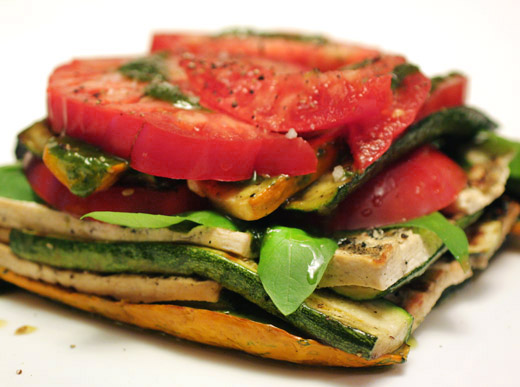
Nothing says Thanksgiving
like vegetable tofu lasagna!

But here's the kicker: the emails goes on to talk about HER dietary restrictions! You see, she's found the God of Dietary Control over the last few years. She no longer eats animal products. She no longer eats carbs. SO...you guessed it...this email was not really about accommodating my son. This was a not-so-subtle hint about ME accommodating HER.  

Which I will. 

I always do. I have a sister with diabetes who has to count all carbs and watch all refined flour, rice and sugar. I have a brother who doesn't eat carbs at all. I have people who won't eat fish, lamb, mushrooms, mint. I accommodate them all. In many cases, I am only paying back their own care and kindness to my son. 

In this situation, I am clearly not paying back, since she's been so gleefully unaccommodating over the years. So...I will grit my teeth a little and pay it forward, in the hopes that some day, there will be a person out there like me who will accommodate my son even when it's annoying and difficult and she really has a million other things to do than make a vegetable, carb-free tofu lasagna.

Earlier this year at a wedding shower, another sister-in-law (I have a BIG family) who has never attempted to accommodate my son announced how proud she was that people complemented her on her wonderful Christmas cookies. She went on to say "So-and-So even said they were better than your mother's cookies!" I gently reminded her that Grandma's cookies did not contain real milk and butter, and haven't in the 18 years my son has had a milk allergy. It wasn't much of a contest. 

I never want these people to feel how awful it is to stare at a table full of food and to know you can only eat the one thing you brought yourself. To know it's your life and even some of your relatives don't love you enough to ask how to help you, how to include you.

Can I mention the wine when we
all say what we are grateful for?
I am trying to be grateful that I have learned the hard lesson that not everyone is always kind, and we shouldn't base our own life choices on what others do or don't do.

But can you really blame me if I just have a tiny thought about spreading lard through those tofu lasagna layers? 

Follow me on Facebook or Twitter  

Wednesday, November 20, 2013

Best Food Allergy Tweets/Posts From 2013 ACAAI Meeting

Sorry, guys...I've been very busy the last couple of weeks, but just over a week ago one of the largest allergy and asthma conferences, the annual American College of Allergy, Asthma and Immunology, was tweeting its brains out.

Here were the tweets and (virtual) presentations I thought were most interesting:

ACE inhibitors are often used to treat high blood pressure. I believe Lisinopril was the one specifically mentioned. This goes hand in hand with the idea that older patients, especially men, can see changes in the severity of their allergic reactions as they age.

Here's an answer on the question many of us asked about component testing. Just as with RAST, the number itself doesn't matter; just the positive result.

Gross! But yes, give your kids the bobber after the dog/ brother/ mailman licked it.

Conversely, tree-nut-allergic individuals have a 30% incidence of concurrent peanut allergy. 

So stop blaming yourselves, FA mommies! I've said this consistently - Mother Nature would not rig the game so babies needed to be given certain foods at certain times. Our existence on this earth has been too precarious to count on that type of consistency. 

Part two of STOP BLAMING YOURSELF! It doesn't matter what you ate. It doesn't matter what you fed your baby. We don't know how sensitization happens, but it doesn't seem to be through the food itself.

Other summaries and presentations you might like:
If you only read one, read that last one.

Happy Wednesday!

Follow me on Facebook or Twitter  

Sunday, November 17, 2013

Magical Thinking and Food Allergies

So we got our FAHF-2 clinical trial email notification this week.

No, it's not the trial results. It was just a brief little note:
We are pleased to let you know that study participants have completed all study visits and we are now able to inform you of which treatment arm you or your child were part of (active or placebo).
[FAB's kid] was on active treatment medication.
At this time we can only provide you with your treatment assignment.  We are unable to share any information pertaining to other study participants.  Once the data is fully analyzed and peer reviewed, we will be able to share the overall study results. 
So...good. We weren't crazy.

The problem is that history is always written after the fact. While you're living your way through something, cause and effect are never clear. When people ask us whether the medication has made all the difference in my son's life, I have to just shrug and say "I don't know." There HAVE been some major changes since last winter:
  • He's now eating all soy (including soy cheese) without restriction. 
  • He's eating baked milk in everything without issue. (The only thing preventing us from introducing baked cheese is our own fear and busy schedules.) 
  • While I know some of you really do not like the concept, he is eating "may contain" for peanut without any issues at all, which has significantly increased the number of processed foods available to him, especially chocolate. 
  • He's started to expand his list of restaurants. While we're still not at the point (and probably will never be) where he can just eat something without asking about it, we no longer worry about cross-contamination.
What we don't know is whether we can attribute all that change to the medication. Is it possible that he had already outgrown soy, that he would have tolerated baked milk at this level without the medication, that "may contain" was always o.k. for him, and that we overreacted when it came to restaurants and cross-contamination?

Of course it's possible. Perhaps even likely. 

On the other had, we did see a measurable, really significant change in his tolerance to peanut. It is just as possible that the process that created that new tolerance also affected his response to these other allergens. But we'll really never know for sure, because the other allergens were not measured as part of the trial. 

It's so easy to see how food-allergy families can have such a diverse approach. The actual evidence we have for severity and tolerance may consist of a single reaction when our child was very young. In the years that follow, some people choose to believe their child's allergy has magically disappeared. Others may re-write it as a completely out-of-control, always life-threatening monster.  Our doctors know nothing. We know next-to-nothing. But, being human, we make up stories to fill the gap. 

Thanksgiving is just around the corner again. The spread of food always prompts the inevitable questions: 

How are his allergies? Did the study cure him? Can he eat what I brought now? Will he be able to take the medication again? Do you want him to do it if he can? Was it worth it? Do you think it worked? Will it work for others? 

Our family will be challenged to write the story that goes with this clinical trial. People really hate the very short story we've told up until now: we just don't know.

Everyone wants a definitive ending...even if we have to make it up. It's human nature. 

Follow me on Facebook or Twitter  

Sunday, November 3, 2013

Inclusion and Food Allergies: How Far Is Too Far?

I enjoy hanging out on Reddit. It feels a little like going to a teenager zoo and I consider it an important study tool in the quest to understand my own teens. Yes, there are other people there who are 40+, but for the most part, Reddit is a collection of teens and 20-somethings with too much time on their hands and often a Lord of the Flies mentality.

So I was not all that surprised to run across this one:


The original poster went on to say:
I was the only one in the neighborhood giving out small goodie bags of bite size butterfingers, recesses peanut butter cups,starbursts and other assorted chocolates during halloween. This woman comes back to my house and got angry at me for giving her son candy with peanut butter in it. He ate some and he was having an allergic reaction. How the hell am i suppose to know what her son is allergic to. It wouldn't kill her to be a good parent and monitor what her kid eats instead of blaming me.
I read through some of the almost 2000 comments, trying to keep my anger in check. The oldie but goodies were all there:

"if touching a nut kills you, you’re supposed to die"

"I went to elementary school in the 1960's. I don't remember anyone having any issue at all with foods."

"Your niece might need to be homeschooled..."


Don't get me wrong: I think the mom who did this made a big mistake. I do understand; in the panic of the moment, I have done some crazy things, including calling a food manufacturer in the middle of a reaction to ask about the ingredients.  But suddenly, I had a small moment of insight of how that Roma family in Ireland might have felt after the police took away their child because she looked too blond to really belong to them. Just because one person in your community does something questionable, does that make it o.k. for the rest of society to pour out their hate on all members? Where does all this hate come from?

No, it's not o.k. that the mom blamed the neighbor for her child's reaction. But it's really not o.k. that so many people are willing to jump on the hate bandwagon as a result.

My Reddit comments to that effect were just drops in the ocean, and I suspect a larger response would only make us look crazy. What is the answer? How do we combat this prejudice without seeming over-reactive?

Follow me on Facebook or Twitter  
Saturday, October 12, 2013

Discuss This Food Allergy Research At The Dinner Table Tonight!

FARE's name change ruined
my awesome pun headline
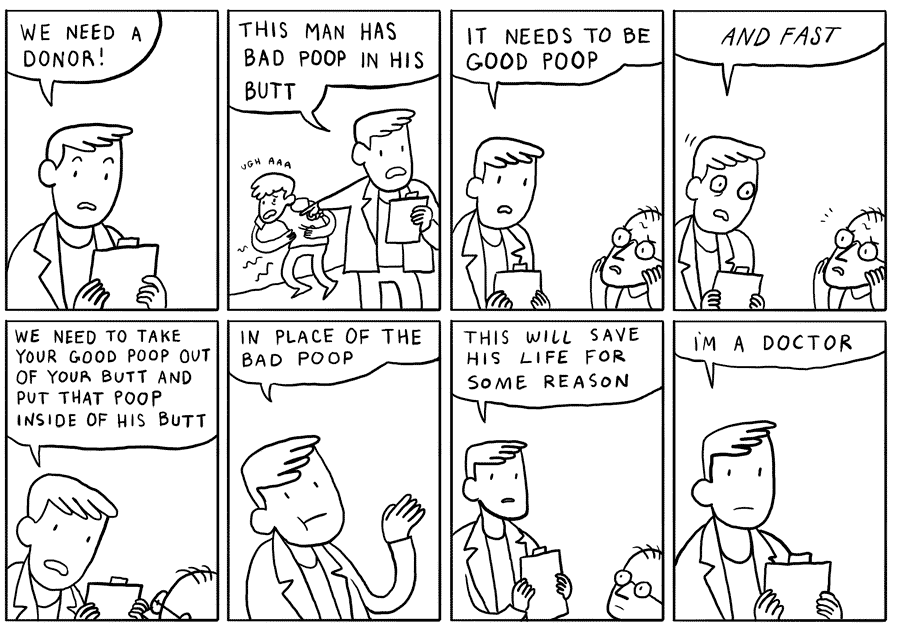
My mom and I went to a reunion this summer with her first cousins, ladies I had not met before. On the way to the restaurant, I was telling my mom about my summer research into intestinal flora and fecal transplant.

The poop had definitely been circulating in the news all summer, with the popular science journals joining in:
We ran into the cousins in the parking lot and introductions and hugs were passed around. Just as I'm opening the door to the restaurant, my mom says "so FAB, tell my cousins what you were just telling me about transferring pooh into people's colons." 

Not the ideal way to be introduced. 

But you can see the difficulty. This is an astonishing new area of exploration in science...and just not great dinner conversation. I'm going to plunge ahead anyway, but be forewarned that you might want to put your snack down before reading further. 

Here's a cartoon to get us started:

From Three Word Phrase - very funny guy!
I first encountered fecal transplant in the literature as part of my day job. It has been extraordinarily successful in treating C. difficile, an often hospital-acquired infection that can ravage its victims. 

If simply transplanting poop from a healthy person into a compromised person can have such amazing results, then why not for other conditions that involve the gut, like food allergies? 

The science of all this is daunting. The human gut contains as many as 100 trillion separate types of bacteria, which is why I always giggle a bit when people talk about "probiotics" as a treatment for food allergies. Typical probiotic supplements contain only the bacteria we can grow outside the body:  usually one of only FIFTEEN strains.
It's a bit like throwing dye into the ocean in the hopes of coloring it red. 

Scientists are working on categorizing these bacteria. One of the more notable efforts going on right now is called the American Gut Project.  That project has already demonstrated that the gut bacteria of older vs. younger Americans, and of Americans vs. less developed countries, are vastly different. All of this comes together very well with the Hygiene Hypothesis II, which says that our decimation of gut bacteria through the use of antibacterials (including triclosan, which I've called the smoking gun for development of food allergies) is at the heart of the rise in intestinal and autoimmune disorders. Even the connection to pets and reduced food allergies makes sense. When we pet our dogs and cats and they, in turn, lick us, different types of bacteria are transferred into our bodies via the skin. Families with pets have different gut bacteria than families without.  

As with everything I read, I am extremely impatient to just cut to the chase. If fecal transplant has the potential to mitigate food allergies, where do we sign up? 

At the moment, fecal transplant is only officially being performed in teaching hospitals, and these facilities are starting to look over their shoulders. Right now, this is an unregulated treatment and the FDA seems to want in on the action. 

On the other hand, if you are adventurous, you can DIY with this helpful Youtube video:


So...all I need is a blender, a way to knock my child senseless so he doesn't know what's about to occur, and a donor! Preferably someone older, whose gut bacteria were colonized before the introduction of antibiotics and the advent of infant formula. Someone in excellent health with an appropriate body weight, who has used only limited antibiotics over the course of their life. 

Gonna see my father-in-law later today. Any suggestions on how to open that topic of conversation? 

Or...maybe I should hold out for the poop pill. At least I could still look my father-in-law in the eye, come Thanksgiving. 

Follow me on Facebook or Twitter  

Sunday, October 6, 2013

Examples of Food Allergy Backlash

I've been pretty busy over the last couple of weeks. So, instead of writing a long blog post, I think I'll just leave a few things here that I've recently run across.

Stores are increasingly putting signs up about allergens. Not all of them are friendly.
This is from an album entitled "Guess What Mark Is Allergic To." His oh-so-helpful co-workers put these notes on food at work.


Someecards has a card for us now.

From Your Food Allergy Is Not My Problem.

Do you guys feel there's more or less of this kind of stuff happening now?


Follow me on Facebook or Twitter